Short answer: for most product teams, React Native is the safer default, because it rides the JavaScript ecosystem, the largest hiring pool in software, and a framework (Expo) that the official documentation itself recommends. Flutter is the better pick when the interface is the product: heavy animations, custom design on every screen, and the need for the app to look strictly identical on every device.
What changed by 2026 is that the old technical objections are gone on both sides. React Native's new architecture (JSI, Fabric, bridgeless mode) has been the default since version 0.76, removing the bridge that caused its historical jank. Flutter's Impeller engine removed shader compilation stutter and made its rendering faster still. The decision has moved from benchmarks to structure: how each framework draws the screen, and who you can hire to build on it.
Two different ways to draw a screen
Almost every practical difference between the two frameworks comes from one design decision: what happens between your code and the pixels.
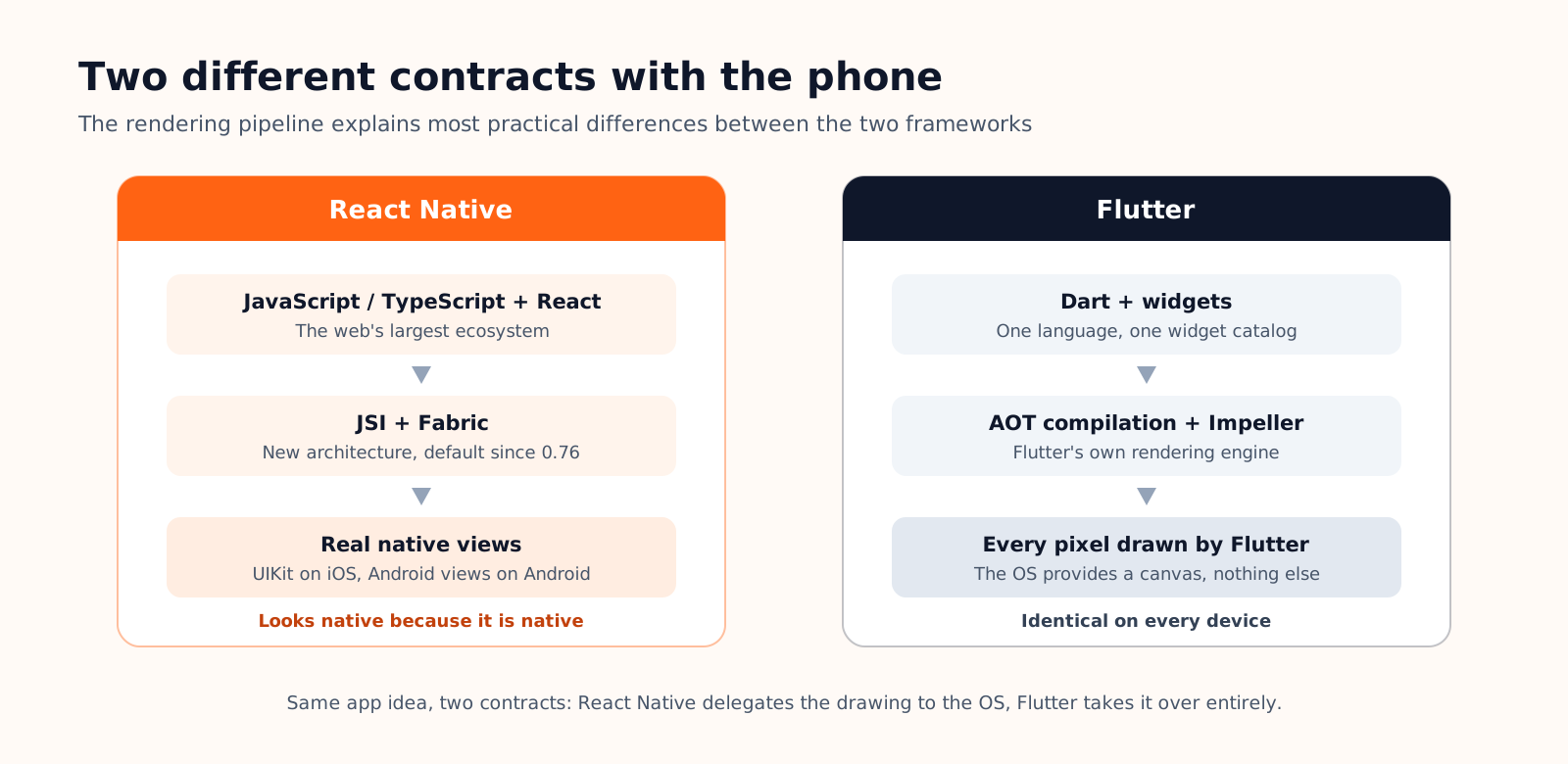
React Native maps your React components to real native views: a button is a UIKit button on iOS and an Android view on Android. Your app inherits the platform's look, accessibility and behavior for free, and follows OS updates without a rebuild. The cost is small per-platform differences you occasionally have to smooth out.
Flutter ships its own rendering engine and draws every pixel itself. The OS provides a canvas, nothing more. Your app looks exactly the same everywhere, down to the pixel, which designers love and which makes visual regressions rare. The cost is that platform conventions (a native date picker, system text behavior) must be imitated rather than inherited.
Language and ecosystem: JavaScript vs Dart
This is where the decision is usually made in practice. React Native is written in JavaScript or TypeScript, the language your web team already uses, with npm's ecosystem behind it. Dart is a well-designed language that most developers learn in a couple of weeks, but its pool of experienced developers remains several times smaller.
| React Native | Flutter | |
|---|---|---|
| Language | JavaScript / TypeScript | Dart |
| UI rendering | Real native views | Own engine (Impeller), draws every pixel |
| Hiring pool | Very large (any React developer) | Smaller, growing |
| Code sharing with web | Natural (React, react-native-web) | Flutter Web exists, heavier for content sites |
| Recommended starting point | Expo (official recommendation) | Flutter SDK + Material widgets |
One structural consequence is easy to miss: with React Native, the developer you hire next probably already knows 80% of the stack. With Flutter, you are either hiring from a smaller pool or training, which is fine for a committed mobile team and expensive for a startup that pivots.
Performance in 2026: closer than you think
In the 2025 Stack Overflow survey, Flutter sits at 9.1% usage and React Native at 8.4%: two healthy, comparable communities. On performance, the honest reading of recent benchmarks is that for standard product apps (lists, forms, navigation, media) users cannot tell the two apart. Flutter keeps an edge in animation-heavy interfaces and in cold start on mid-range Android hardware, thanks to ahead-of-time compilation and Impeller. React Native closed most of its historical gap when the new architecture became the default, and several benchmarks now give it better startup time and battery behavior on iOS.
How to actually choose
If you go the React Native route, start with Expo: the React Native documentation itself recommends it, and it turns certificates, builds and store submissions into a managed service. We explain the framework in detail in What is Expo, and the wider landscape (including Kotlin Multiplatform and WebView shells) in our cross-platform development guide.
This is also the stack Cadrant's mobile app builder bets on: mobile projects generate a real Expo / React Native application for iOS and Android, described from a prompt, with the builds running on your own Expo account. The choice of React Native there is exactly the reasoning above: the generated code stays in the ecosystem your next developer already knows.
The short version
- Both frameworks are mature and fast in 2026; benchmarks no longer decide.
- React Native wins on ecosystem, hiring and web proximity; Flutter wins on rendering control and cross-device consistency.
- Default to React Native with Expo unless your product is interface-first; then evaluate Flutter seriously.